From First Click to Long-Term Play: The Impact of UX Design
Content
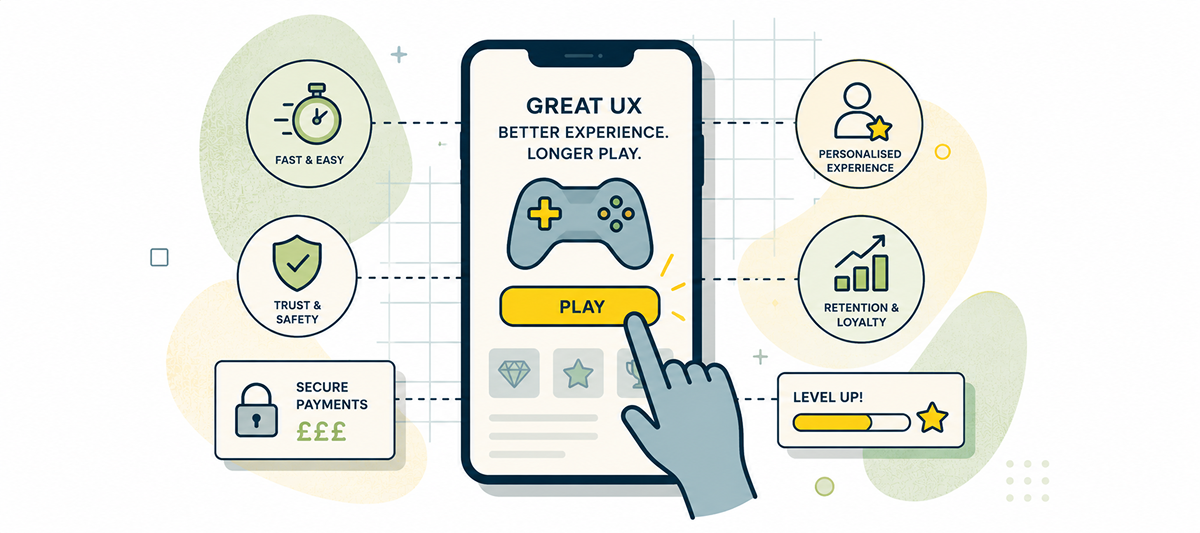
In online gaming, user experience design is no longer just a visual detail. It shapes how quickly a player understands a platform, whether they trust it, and whether they return after the first session. A game may offer strong visuals, generous rewards or a wide content library, but if the interface feels slow, confusing or overloaded, many users will leave before reaching the core experience.
Modern user engagement depends on usability, accessibility, visual clarity and responsive interaction. For online games, these factors affect every stage of the player journey: the first click, registration, payment, gameplay, account controls and long-term retention.
First Impressions Start Before the Game
The first impression begins before the player launches a game. It starts with the landing page, app screen, sign-up form or game lobby. If a UK player sees unclear bonus terms, hidden payment details or a crowded homepage, the platform immediately loses credibility. By contrast, a clean interface with clear sections such as “Games”, “Promotions”, “Payments” and “Account” reduces uncertainty.
Speed also matters. A slow interface creates doubt before play even begins. Good UX removes hesitation: users should know where to click, what happens next and how to return if they make a mistake.
| UX Element | Why It Matters | Example |
|---|---|---|
| Fast loading | Reduces early exits | Game lobby opens without delay |
| Clear navigation | Helps users find content quickly | Slots, live games and promotions are easy to locate |
| Transparent pricing | Builds trust | Deposits and withdrawals shown in £ |
| Simple registration | Lowers friction | Short form with clear verification steps |
| Mobile optimisation | Supports modern play habits | Buttons and menus work smoothly on smaller screens |
Trust Is Built Through Clarity
Trust is one of the most important outcomes of good UX. Online gaming often involves real money, personal data and account verification, so users need to feel that the platform is professional and predictable.
Design can support this trust by making key information easy to find. Payment rules, bonus terms, privacy details and account controls should not be hidden behind several menus. For gambling-related products, safer gambling guidance also shows why visible customer protection tools are important.
This does not mean the interface has to feel formal or dull. Strong UX presents serious information clearly while keeping the journey smooth. A player should be able to check limits, view account history or manage settings without feeling lost.
Mobile UX Is Now the Standard
For many players, the first experience happens on a phone. That changes the design priorities. A desktop interface can use wide menus, large banners and detailed sidebars. A mobile interface needs clearer hierarchy, larger buttons and fewer distractions.
Recent mobile-first design guidance stresses that modern users interact through touch, not a cursor. That means spacing, button size and simplified navigation are essential, especially when users are moving quickly between screens.
Good mobile UX usually includes:
- large tap-friendly buttons;
- short and simple menus;
- readable text without zooming;
- fast game filtering;
- clear balance and account information;
- simple deposit and withdrawal flows.
For example, if a player wants to deposit £20 and start playing, the process should feel direct. The screen should show the amount, available payment methods, minimum deposit and confirmation step clearly. Any friction at this point can interrupt the user’s intent.
Engagement Depends on Reducing Friction
Long-term play is not created only by bonuses or rewards. It is also created by removing small irritations. A weak search function, confusing game categories, repeated logins or unclear bonus activation can all reduce engagement.
Good UX helps users move naturally from one action to the next. A player who enjoys slots should be able to find similar games quickly. A user who joins a tournament should see the rules, progress and ranking without opening multiple pages. A player claiming free spins should understand where they apply and when they expire.
Strong UX navigation keeps users exploring because the platform feels easy to control. When users can move around without confusion, they are more likely to stay longer and return later.
Features That Encourage Return Visits
Retention is where UX becomes strategic. A platform can attract users with a welcome offer, but it keeps them through habit, comfort and perceived value. Features such as favourites, recently played games, personalised recommendations and loyalty progress can make the experience feel familiar.
However, engagement tools must be balanced. Too many pop-ups, aggressive promotions or constant notifications can make the platform feel noisy. Better UX uses timing and relevance. A reload bonus may be useful after a previous deposit, while a tournament reminder works better when the user has already shown interest in that game type.
The strongest long-term engagement features feel helpful rather than pushy. They support the user’s behaviour instead of interrupting it.
Common UX Mistakes in Online Games
Many platforms still lose players because of avoidable design problems. The most common issues include overloaded homepages, vague bonus wording, weak mobile layouts, slow payment pages and poor filtering.
Another frequent mistake is hiding important information behind attractive visuals. A bonus may look strong, but if the wagering terms are difficult to find, trust decreases. In the UK market, unclear currency handling can also damage the experience. If a platform accepts pounds sterling but displays key limits in another currency, the user may hesitate.
Responsible Design Supports Better Engagement
Good UX should not only increase playtime. It should also support safer and more informed play. Responsible design gives users control over their activity. This includes visible spending tools, clear session information, deposit limits and accessible help pages.
These features do not weaken engagement. They make the product more sustainable. The strongest gaming experiences are not built around endless stimulation, but around confidence, clarity and control.
Conclusion
From the first click to long-term play, UX design shapes every stage of the online gaming journey. It influences whether users stay, whether they trust the platform and whether they return. Fast loading, clear navigation, transparent payments, mobile-first layouts and responsible account tools all contribute to stronger engagement.
In a competitive market, good design is not decoration. It is a practical advantage. Platforms that make gaming feel simple, safe and enjoyable are more likely to turn first-time visitors into loyal players.